


Miyazaki Jingu is worth visiting from Hyuga when you want a calm, cultural break from the beach: allow roughly 75–90 minutes by car from JR Hyuga-Shi Station, use the shrine’s visitor parking area, and give yourself 45–90 minutes to walk the cedar-lined grounds respectfully. It works particularly well on a no-surf or wind-affected day.
What is Miyazaki Jingu, and is it worth the drive from Hyuga?
Miyazaki Jingu is a Shinto shrine in Miyazaki City associated with Emperor Jinmu, traditionally regarded as Japan’s first emperor. It is worth the drive from Hyuga if you want a quiet cultural stop rather than another busy attraction. The main appeal is the atmosphere: a broad approach, tall trees, pale gravel, and a slower pace than the coast.
A forest shrine, not a quick photo stop
The approach is long and tree-lined, with restrained shrine buildings rather than flashy displays. Give yourself at least 45 minutes for a respectful walk to the main worship area and back; 60–90 minutes is better if you want to move slowly, read signs, or browse shrine items.
Festival days, ceremonies, and seasonal events can affect crowd levels, parking, and access. Check the official shrine information before leaving Hyuga.
Why it fits a Hyuga surf trip
After several mornings around Okuragahama Beach or Kanegahama Beach, a shrine day changes the rhythm without requiring a complicated itinerary. It works well for non-surfers, beginners taking a rest day, or experienced surfers waiting for a better weather window.
A surf trip does not need surf every hour. Conditions change, bodies get tired, and a wind-affected or marginal day is often better used for a drive south.
Respectful basics
This is an active place of worship. At the torii gate, avoid walking directly through the center where possible, as the central line is traditionally treated as the path of the deity. Follow posted guidance at the temizuya if it is in use, and respect signs around photography restrictions.
Wear clean, modest casual clothing rather than wet surfwear. Bring water in summer, and expect damp gravel or shaded surfaces after rain. Comfortable walking shoes are useful.
How do you get to Miyazaki Jingu from Hyuga?
Driving is the most practical option from Hyuga, especially for groups or travelers carrying surfboards. From JR Hyuga-Shi Station, allow roughly 75–90 minutes by car depending on traffic, route, weather, and stops. Do not build the day around a tight appointment.
By car: the simplest option
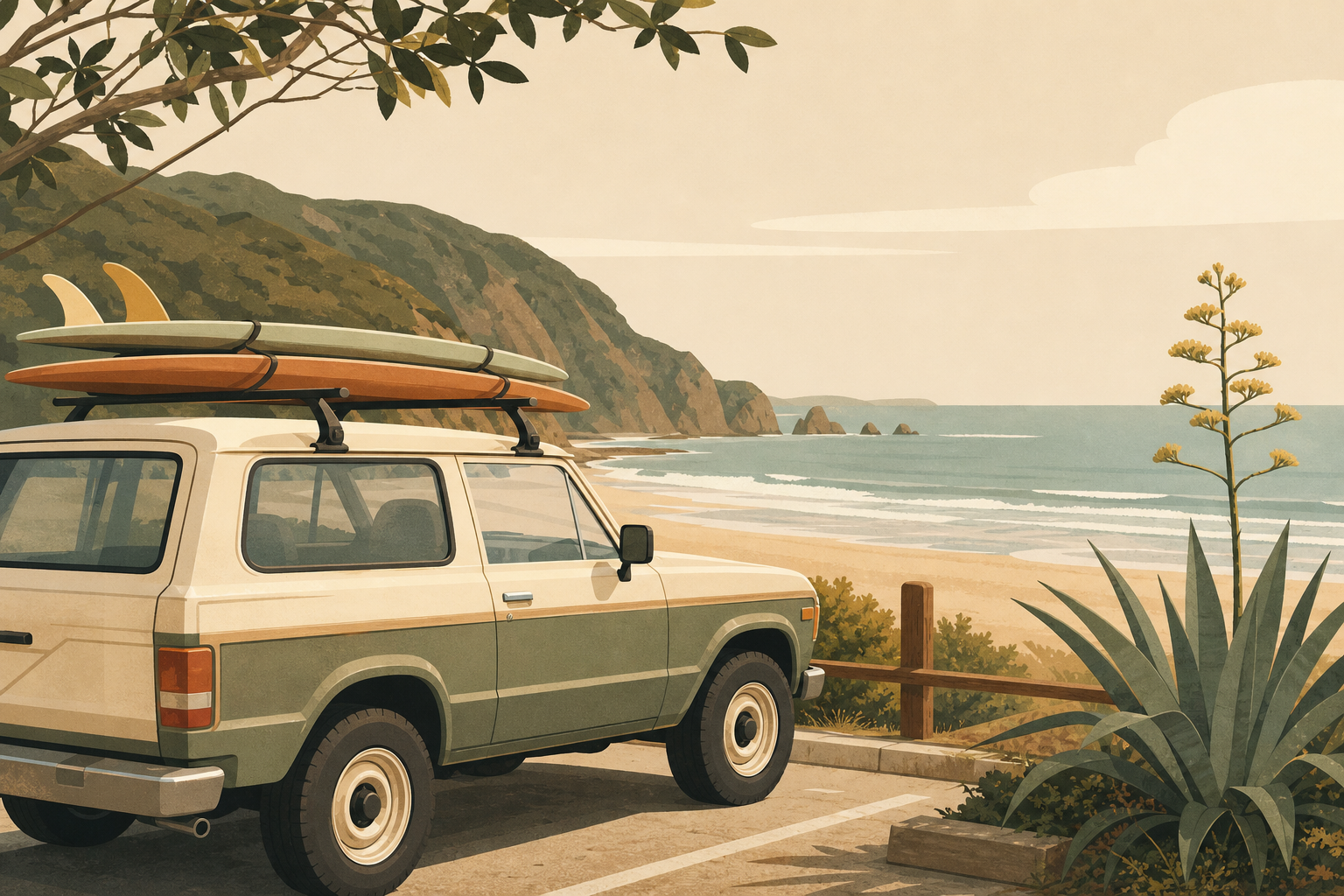
For travelers staying near Okuragahama Beach or Kanegahama Beach, a car gives the most flexibility. Head south toward Miyazaki City, set navigation to “Miyazaki Jingu,” and use designated visitor parking rather than stopping on nearby roads.
From Hyuga Surf Camp, plan on roughly 75–90 minutes in normal conditions. Leave after breakfast rather than trying to combine the drive with a dawn surf routine.
- Confirm the visitor parking entrance before departure.
- Leave time for city traffic, fuel, and a restroom stop.
- Do not leave boards or valuables visibly displayed in an unattended vehicle.
- Check official notices if a festival or major event is listed.
By train: possible, but less flexible
Public transport can work for solo travelers without a car. Travel south from JR Hyuga-Shi Station toward Miyazaki, then connect for the Miyazaki Jingu area. JR Miyazaki-jingu Station is generally the closest rail stop, followed by a short walk to the grounds.
Check current timetables through JR Kyushu before committing. Missed connections can make the return to Hyuga long, especially if you want to arrive before dark. For groups of three or four with luggage, a rental car is often easier than coordinating tickets and transfers.
Arrival and timing
After parking, take a minute to organize your phone, wallet, water, and camera before entering. Miyazaki Jingu is in an urban area, so it pairs easily with lunch in Miyazaki City. However, do not assume nearby businesses keep the same weekday, holiday, or seasonal hours; confirm your plan on the day.
What should you see and do at Miyazaki Jingu?
The best visit is simple: walk the main approach slowly, pay respects at the shrine, and leave time for lunch or a calm city break afterward. The trees, filtered light, gravel paths, and contrast with coastal travel are the reason to go.
A straightforward shrine visit
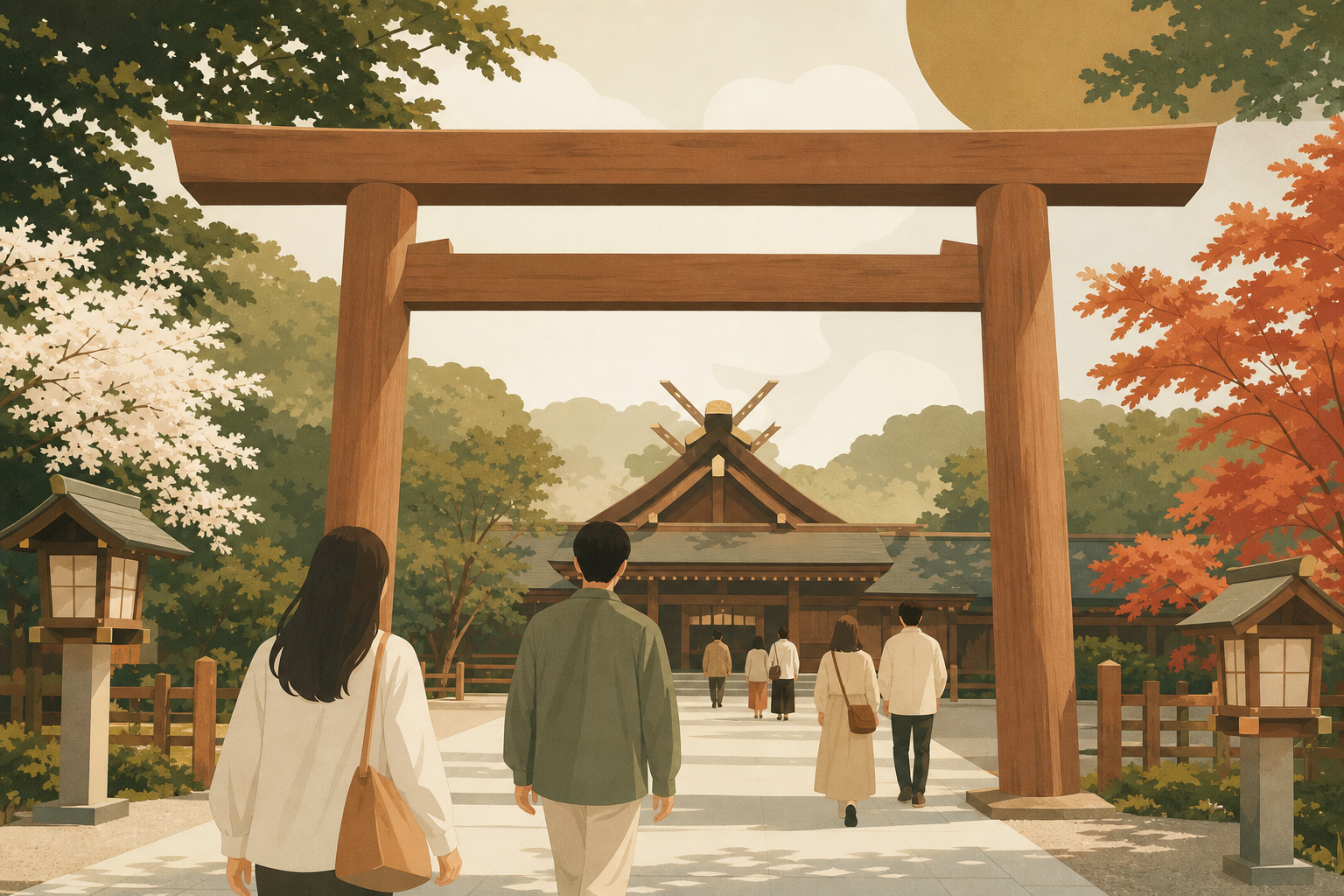
Start at the torii and take the approach at an unhurried pace. At the worship hall, follow posted signs and watch how other visitors behave if you are unsure of the procedure.
If you buy an omamori charm or ema wooden plaque, availability and designs can vary. Keep cash available for small shrine purchases rather than assuming card payment.
Pair it with lunch in Miyazaki City
Miyazaki City is the natural place for lunch after the shrine. Choose one food stop or neighborhood instead of trying to rush across town and add multiple attractions. In warm weather, an indoor midday break can be especially welcome; in cooler months, the shaded shrine grounds may feel chilly, so keep a light layer in the car.
What not to expect
Miyazaki Jingu is not a surf stop. There are no surf rentals, beach facilities, or sea views. If you want the Pacific, stay around Hyuga or add a coastal destination on another day.
Do not arrive immediately after surfing in wet boardshorts, with sandy feet, or with loose beach gear. Shower, change, and organize equipment before entering.
Surf-to-shrine timing
Change out of wet clothing and remove sand before arriving. Give the visit its own pace.
Festival-day assumptions
Parking, crowd flow, and access can change during ceremonies or holidays. Check official notices close to your visit.
Tight return plans
City traffic and late train connections can complicate the return to Hyuga. Leave a buffer.
Can you combine Miyazaki Jingu with surfing and Hyuga sightseeing?
Yes, but it works best as a rest-day or half-surf-day plan. Trying to fit a full surf session, a long shrine visit, lunch, and several Hyuga viewpoints into one daylight window usually feels rushed.
Option one: morning surf check, then the shrine
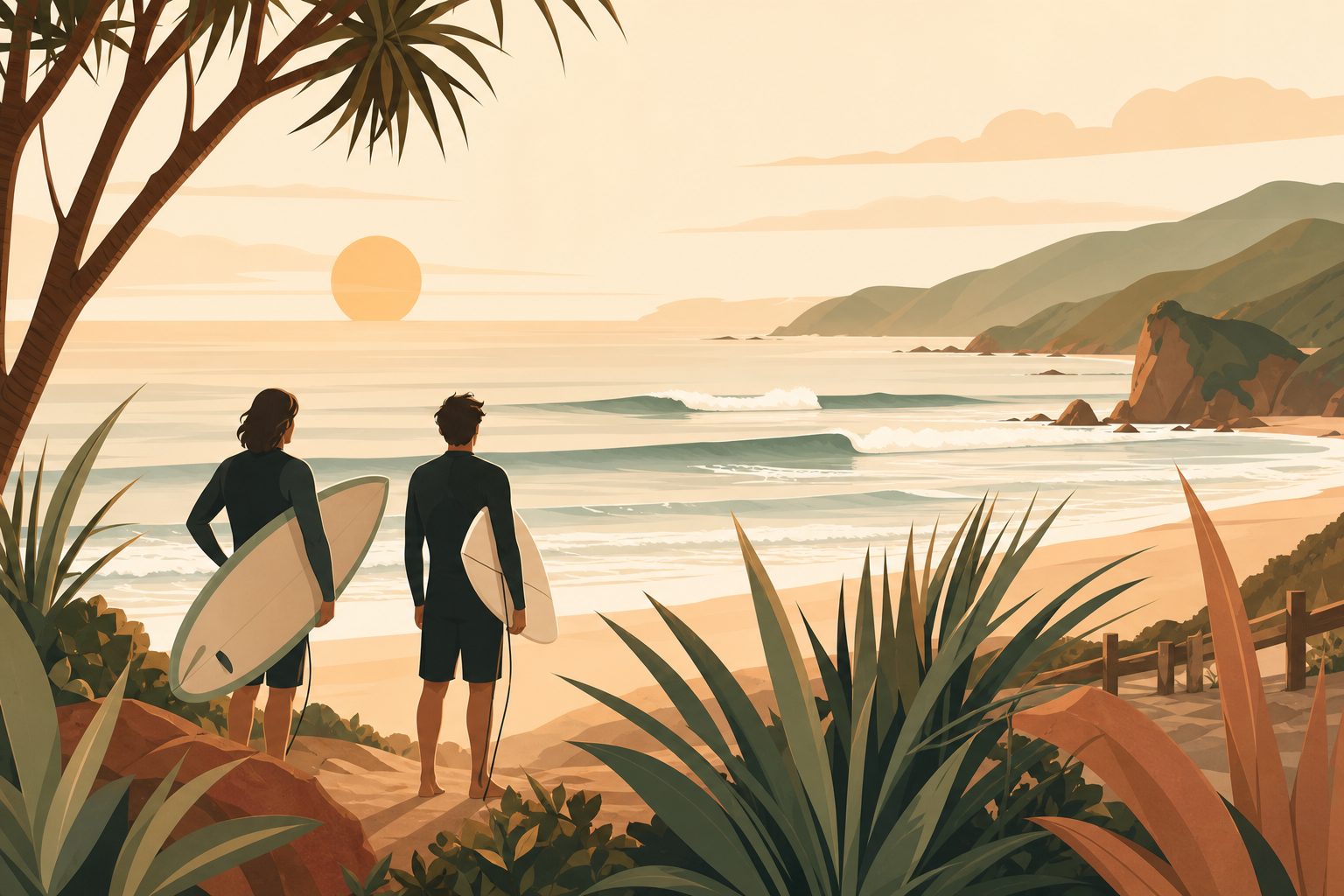
Check Okuragahama Beach early and make a conservative decision based on actual local conditions. You may find calm surf, wind texture, or simply a day that does not suit your group’s energy.
If you decide not to paddle out, rinse off, pack water and a layer, and leave for Miyazaki Jingu by mid-morning. This allows time for the shrine, lunch in Miyazaki City, and a relaxed return drive.
Option two: surf one day, shrine the next
This is often the better choice for first-time visitors. Give your beach day to the beach, then visit Miyazaki Jingu without loading wet gear into the car.
Beginners may find Okuragahama Beach easier to approach than Kanegahama Beach because of its long beach setting and more straightforward access, although conditions, currents, and crowds still need checking on the day. Kanegahama Beach deserves its own check, particularly because reef and beach-break features require more careful local judgment.
A realistic Hyuga-to-Miyazaki day
Check the coast
Look at Okuragahama Beach in the morning and decide whether it is a surf day or rest-day drive.
Visit Miyazaki Jingu
Drive south, use visitor parking, and allow 45–90 minutes for the approach and worship area.
Return with margin
Have lunch in Miyazaki City, then drive back to Hyuga before you are tired.
Save Cross no Umi and Umagase Cliffs for a separate Hyuga-area outing. They are roughly 20–30 minutes by car from Hyuga Surf Camp in the Hososhima area, while Miyazaki Jingu is south in Miyazaki City. Combining them is possible only if you want a long driving day.
Where should you stay for a Miyazaki Jingu and Hyuga trip?
Choose a base according to how many beach days you want, whether you have a car, and how your group plans to spend evenings. Miyazaki City is easier if the shrine and city restaurants are the main purpose; Hyuga is usually more practical if Okuragahama Beach, Kanegahama Beach, and flexible surf timing are central.
Stay options

- Miyazaki City hotel or apartment-style stay — useful for shrine-first, food-first, and rail travelers; confirm parking, building rules, and check-in details.
- JR Miyazaki area hotel — convenient for train travelers or late arrivals; less direct for dawn beach checks in Hyuga.
- Hyuga city-center hotel — roughly 75–90 minutes by car to Miyazaki Jingu; useful for travelers wanting nearby shops and restaurants.
- Hyuga Surf Camp — roughly 75–90 minutes to Miyazaki Jingu, about 5–10 minutes to Okuragahama Beach, and roughly 10–15 minutes to Kanegahama Beach; suitable for groups and coast-led trips. Confirm current details, rates, and availability before booking.
- Coastal Hyuga rental home or guesthouse — useful for self-driving groups who prioritize the beach; confirm parking, board storage, and the exact address.
Why a whole-house Hyuga stay can help
For groups, the practical details matter: storing boards, drying towels, making breakfast, and deciding each morning whether conditions justify a beach session or a drive. A Hyuga base makes those decisions easier when surfing is a major part of the trip.
Hyuga Surf Camp is one option for groups staying around the Okuragahama/Kanegahama area. It may not suit an itinerary focused entirely on Miyazaki City, but it works well for a coast-led trip with one dedicated Miyazaki Jingu day. You can [Check availability & rates] when your dates and group plan are settled.
Before booking any stay, confirm parking, beach or station distance, luggage access, shared-space layout, and surfboard transport or storage. Do not assume a city property has room for beach gear.
FAQ
Visiting Miyazaki Jingu
Q: How long does it take to drive from Hyuga to Miyazaki Jingu? A: From JR Hyuga-Shi Station or the Okuragahama/Kanegahama area, allow roughly 75–90 minutes by car. Traffic, weather, route choice, and holiday travel can extend that.
Q: Is there parking at Miyazaki Jingu? A: The shrine has visitor parking areas, but availability and arrangements can change during events. Check current shrine notices and navigation before departure.
Q: Can I visit Miyazaki Jingu in beach clothes? A: Casual clothing is fine, but change out of wet surfwear and remove sand before entering. Walking shoes and a light layer are useful.
Q: Can I surf at Okuragahama Beach and visit Miyazaki Jingu on the same day? A: Yes, but it is more comfortable after a brief morning surf check or short session than after a full surf day. Do not force a tight schedule.
RESERVATION
Book Your Stay at Hyuga Surf Camp
A whole-house surf guesthouse in Hyuga, Miyazaki — close to Okuragahama and Kanegahama. Ideal for surf trips, groups, and beginners to experienced surfers. Check availability and rates on the booking site.
Book Your Stay at Hyuga Surf Camp
Please confirm current rates, availability and amenities on the booking site.
Sources
- Miyazaki Jingu official website: https://miyazakijingu.jp/
- Miyazaki City Tourism Association: https://www.miyazaki-city.tourism.or.jp/
- JR Kyushu route and timetable information: https://www.jrkyushu.co.jp/
If your trip is centered on Hyuga’s beaches, choose surf days after checking locally and keep Miyazaki Jingu for a slower day. Confirm car plans, parking, sleeping arrangements, current rates, availability, and property details before booking.
Related Articles
Comment