


Japan’s surf season runs year-round, but the right time for your Hyuga trip depends less on finding a single “best month” and more on your level, wetsuit comfort, transport and flexibility. Around Okuragahama Beach and Kanegahama Beach, summer is straightforward for first trips, while autumn through spring asks for closer daily checks.
When is the Japan surf season in Hyuga?
Hyuga can work as a surf-trip base in every season, provided you treat wave conditions as daily information rather than a calendar guarantee. This stretch of Miyazaki faces the Pacific, and the feel of the coast changes with wind, swell, tide, water temperature and weather systems. A date can help you plan clothing and travel rhythm; it cannot tell you what to paddle out in.
Summer: warm travel days, busier beach rhythm
For many first-time visitors to Japan, roughly June through September is the easiest period to organise: longer daylight, lighter packing and a beach-town pace that makes it less intimidating to start. At Okuragahama Beach, the long sand line is visible from the beachside parking areas, with people carrying boards across warm sand and the sound of cicadas coming from the road side.
That ease does not mean you should skip the check. Summer holidays, weekends and surf events can bring more people to the water and parking areas. Tropical weather systems can also alter conditions quickly. If you are new, book a lesson or rental with a local provider in advance, then let the instructor decide whether the day is suitable. Do not arrive assuming that warm weather equals beginner surf.
Autumn: flexible schedules matter more than fixed expectations
Autumn is often the period surfers ask about first, especially when they are watching Pacific storm charts. It can bring changing conditions, but it also brings typhoon-season considerations. Strong wind, heavy rain, large surf and road disruption are all possible depending on the system. Keep your itinerary loose, follow local warnings, and do not treat a forecast screenshot as a go signal.
From the Kanegahama Beach parking area, you can watch the Pacific darken toward late afternoon and see surfers return with boards under their arms. It is a useful reminder: look from shore first. Kanegahama has both reef and beach-break characteristics, and the appropriate entry point depends on the day. More experienced surfers should make their own assessment of tide, bottom, current and the local lineup.
Winter and spring: quieter-feeling travel, warmer gear planning
Winter and spring can suit travellers who prefer road trips, uncrowded weekday scheduling when it occurs, and time for sightseeing between checks. But air and water temperatures are cooler than summer, and winds can make the shoreline feel sharper than the car park suggests. Bring or arrange suitable wetsuit equipment through a local shop; availability and recommended thickness vary, so check current advice before travelling.
Spring also has its own practical benefit: you can build a trip around coastal walks, cafés and drives without trying to make every daylight hour a surf session. Honestly, that is usually a better Japan surf trip than forcing three cold, tired sessions because the calendar says it is “season.”
Is Okuragahama Beach good for beginner surfers?
Yes—Okuragahama Beach is generally the more practical starting point for beginners in this part of Hyuga, but you still need a same-day condition check and, ideally, local instruction. Guides sometimes push visitors toward whatever spot is getting attention; my view is simpler: for a first session, a broad beach break with clear parking and a straightforward walk to the sand is often the more workable choice than chasing a more technical-looking wave.
Getting there and reading the beach before you suit up
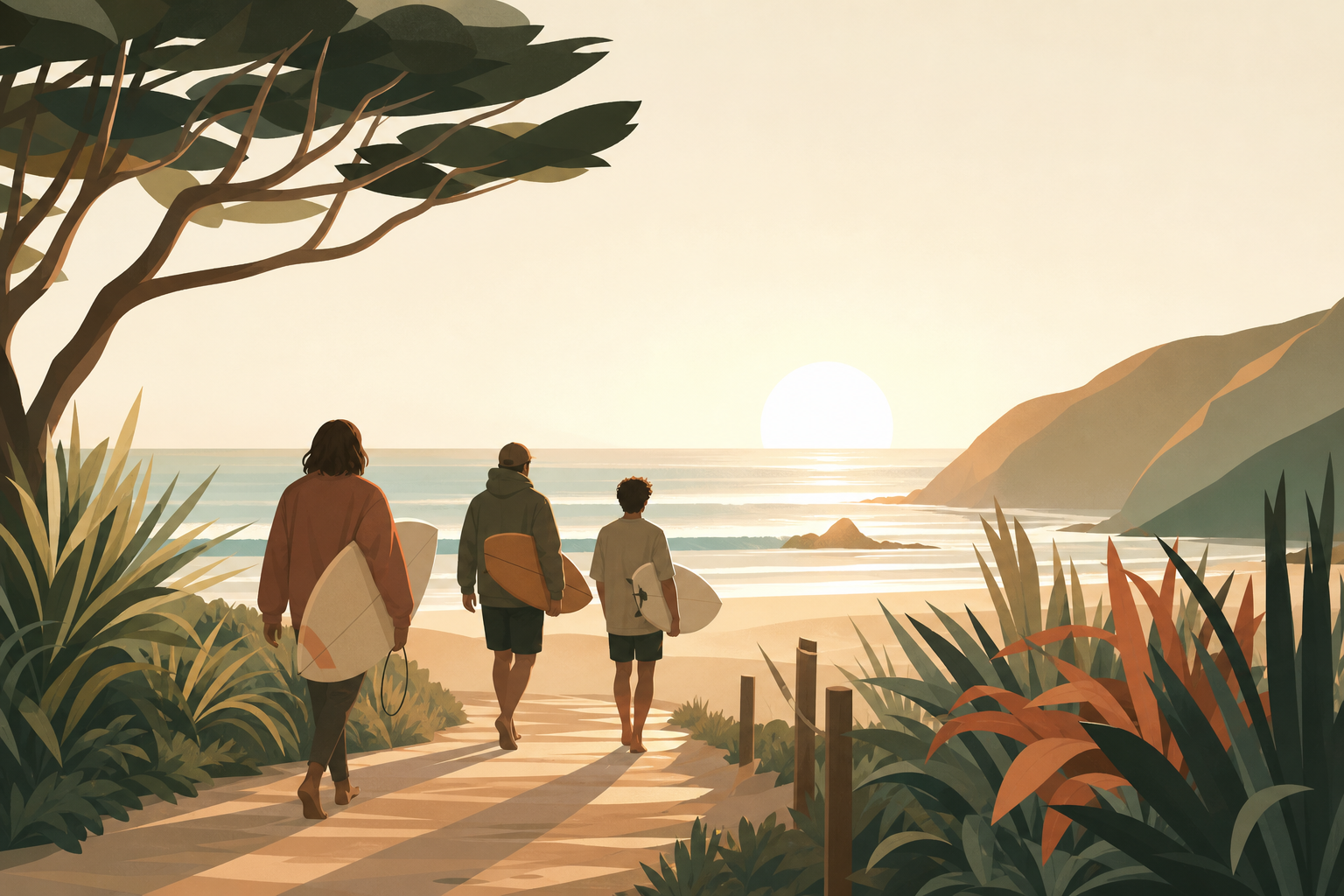
Okuragahama Beach is about a 9-minute drive from JR Hyuga-Shi Station and roughly 4 minutes from Hyuga IC, traffic permitting. It is a long beach—about 4 km—with parking along the beach area, so you can do a calm dawn check without committing immediately. Pull in, watch several sets, note where people are entering and exiting, and look for any flagged or restricted areas.
The beach has toilets and heated showers listed by Hyuga City. Facilities, access arrangements and seasonal operation can change, so check current local information. The important practical point is that you can check the ocean from near your vehicle rather than carrying boards a long way through town. That is especially useful for families, first-time renters and groups with mixed confidence.
Lessons, rentals and the right first-day setup
Sunrise Surf Shop and DearSurf are near the Okuragahama Beach swimming-area intersection and list lessons plus board and wetsuit rental. Both need advance confirmation for dates, language support, equipment size and weather-related changes. A soft board, a lesson and one focused session are usually a more sensible start than buying a shortboard-shaped souvenir decision on day one. We have all seen that plan go sideways.
For a beginner, ask the shop these questions before paying:
- Is today suitable for a first lesson, and where will we enter the water?
- Are board and wetsuit rental included, and what should I bring myself?
- What is the cancellation or rescheduling policy if conditions change?
- Is there a safe place to leave shoes, valuables and dry clothes during the lesson?
What experienced surfers should not overlook
Okuragahama is not “beginner-only.” Its shape, banks, wind and swell response vary from day to day and along the long stretch of sand. If you are an independent surfer, do not assume that the area used by a school is the area you should surf. Watch the lineup, give lessons space, avoid dropping in, and make conservative decisions if you do not know the beach.
At dawn, the Pacific can look deceptively calm from the parking lot while the water is doing something different farther out. Give yourself ten minutes of watching. It is free, and it prevents a surprising number of poor calls.
Should you surf Kanegahama Beach on a Japan trip?
Kanegahama Beach is better approached as a step up from a first beach lesson, especially when conditions show more power or the reef-influenced sections are in play. It is around a 15-minute drive from JR Hyuga-Shi Station and roughly 10 minutes from Hyuga IC, with parking and toilets near the beach. From Hyuga Surf Camp, it is generally about 10–15 minutes by car.
Why Kanegahama asks for more judgement
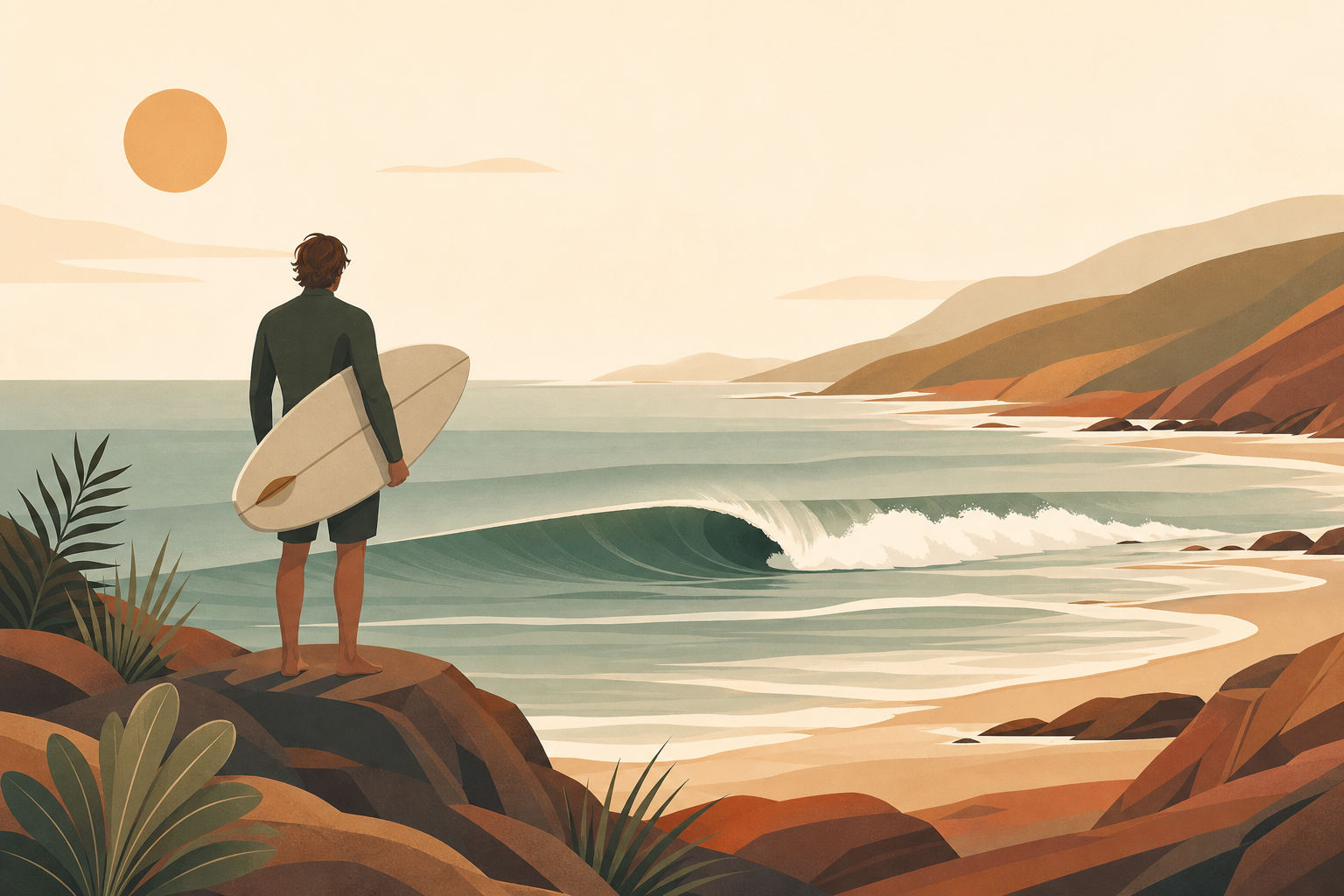
Kanegahama combines beach-break and reef-break character. That variety is part of why surfers visit, but it also means there is no single simple rule for entering, positioning or choosing a board. Conditions can change with tide and swell, and a spot that looks manageable from one angle may not suit your level once you are in the impact zone.
The visual cue here is different from Okuragahama: the coast feels more sculpted, and at sunset the low light runs along the shoreline rather than across one wide open beach. Nice to look at, yes—but do your safety decision before the light drops. If you cannot clearly read your route in and out, wait for another session or ask locally.
Local instruction and equipment planning
Azuray Surfing School is located near Kanegahama Beach and lists lessons for a range of levels. Contact the school directly to confirm current lesson format, rental availability, meeting place and whether the day’s conditions are appropriate. For visitors without a car, also ask about transport before assuming you can walk between every beach facility; this coastline is easier with a vehicle.
Do not base a Kanegahama plan on social-media clips alone. Those clips rarely show the paddle-out, tide stage, crowd pattern or the sessions that were called off.
A simple level-based choice
What is your surf level? Be honest here, not aspirational.
First lesson or very new surfer
Start by checking Okuragahama Beach with a school. A broad sandy setting is often easier to manage than trying to interpret a reef-influenced lineup.
Comfortable beginner
Build skill at the beach where your instructor or local check recommends, and choose conditions that leave room for mistakes.
Independent intermediate or above
Check both beaches from shore, assess tide and entry points, and choose the break that matches your actual experience that day.
Non-surfing travel companion
Use the beach check as a short stop, then head to the Hososhima sights rather than waiting in a cold car for hours.
How should you plan a Hyuga surf day by season?
A Hyuga day works best when you separate the surf check from the commitment to surf. The coast is close enough that you can look, eat breakfast, check again and then decide—particularly if you are staying around the Okuragahama/Kanegahama area. From JR Hyuga-Shi Station, Okuragahama is about 9 minutes by car and Kanegahama about 15 minutes, so a rental car gives you useful flexibility.
The morning check: park, watch, then decide

Start at Okuragahama’s beachside parking around first light or after breakfast. You may see a calm beach break from the parked car, a few people studying the horizon, and wet footprints leading back to the showers. Watch long enough to see the pattern, not just one attractive set. Check wind, tide, water movement, other users and your own energy level.
If it is not a fit, do not spend the whole morning arguing with the sea. Drive south toward Kanegahama only if it makes sense for your level, or turn the day into a coastal sightseeing day. This is why a car and an unhurried schedule matter more than booking a room directly opposite one named break.
A flexible half-day route
Check Okuragahama first
Use the beachside parking, watch conditions from shore, and confirm any lesson or rental plan before changing clothes.
Choose one session or one alternative
Surf only if the location and conditions suit your level; otherwise drive toward Hososhima for a dry-land coastal afternoon.
Finish with the coast, not a rushed second surf
Cross no Umi is about 20–25 minutes by car from Hyuga Surf Camp, while Umagase Cliffs and Omi Shrine are roughly 25–30 minutes.
Sightseeing when the ocean plan changes
Cross no Umi is a viewpoint, not a surf break. From its deck, the Pacific stretches beyond the cliffs and the sea breeze can be noticeably colder than it was at the beach, especially in stronger weather. Bring a light layer even if the car was warm. Keep back from edges and follow site guidance.
Continue in the Hososhima area to Umagase Cliffs for columnar rock faces and a maintained walking route. Wear shoes with grip, not flip-flops after a surf. Omi Shrine adds a quieter stop by the sea; treat it as a place of worship, observe basic shrine manners, and remember that exposed paths can be windy. These three stops fit naturally on a no-surf afternoon without pretending they are interchangeable with a session.
Which Hyuga stay fits your Japan surf season trip?
The right stay is the one that lets your group adapt to the day, not necessarily the one nearest the beach with the most dramatic photo. “Isn’t a hotel easier?” It can be—particularly for one person without a car. But for a group with wet gear, early starts and changing plans, having everyone under one roof often makes the trip less fiddly.
Six practical base options around Hyuga
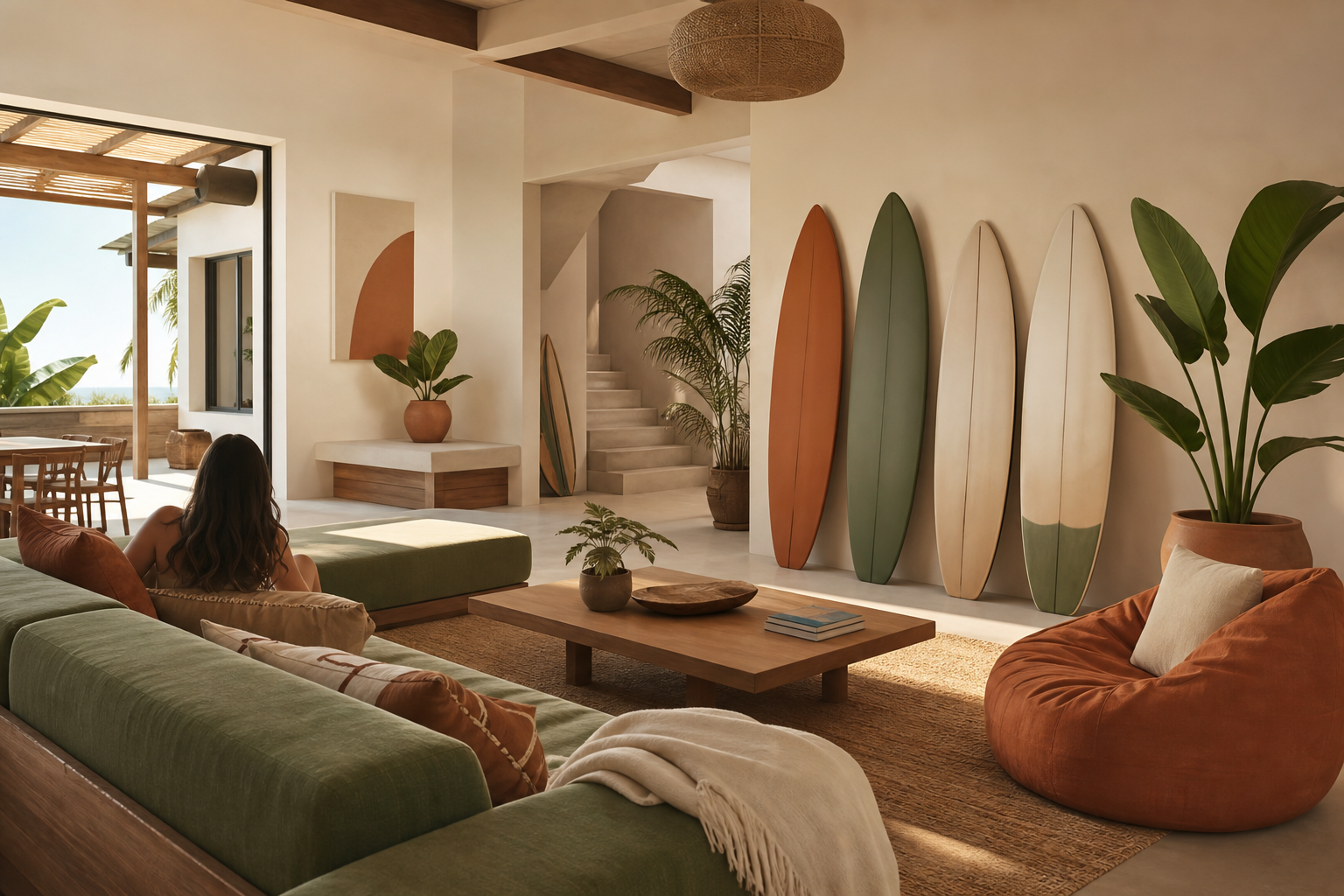
- Hyuga Surf Camp — around 5–10 minutes by car to Okuragahama Beach and 10–15 minutes to Kanegahama Beach; suits beginner-to-intermediate surfers, inbound travellers and groups who want a whole-house base; beachside parking is available at Okuragahama, and current rates, occupancy and facilities should be confirmed before booking.
- Guest House Goofy — within walking distance of Kanegahama Beach according to its operator; suits surfers who prioritise staying close to Kanegahama; use the beach parking where appropriate and confirm current gear-storage, shower and shared-space details directly with the property.
- OCEAN SIDE OKURAGAHAMA BEACH GARDEN — by Okuragahama Beach near the beach facilities; suits travellers who want an Okuragahama-focused location and access to the nearby surf-shop area; confirm parking, room configuration and seasonal availability directly.
- A JR Hyuga-Shi Station-area hotel — roughly 9 minutes by car to Okuragahama and 15 minutes to Kanegahama; suits solo travellers arriving by train or people who want restaurants and station access after surfing; you will still likely want a rental car for flexible beach checks.
- A rental house in the Hiraiva/Okuragahama side — generally useful for families or board-carrying groups wanting short drives toward Okuragahama; check off-street parking, drying rules and the exact beach route before booking rather than relying on a pin location.
- A Miyazaki City base — about an hour by car to the Hyuga coast, depending on route and traffic; suits a wider Miyazaki itinerary more than repeated dawn checks at Hyuga; practical for a day visit, but less convenient if your priority is deciding between Okuragahama and Kanegahama each morning.
Booking with the weather in mind
For a whole-house stay, check the property’s current capacity, cancellation terms, parking and equipment details before committing. Those details can change by building and season. If Hyuga Surf Camp fits your group’s route, you can [Check availability & rates] before locking in rental cars and lessons.
My local opinion is that surf travel improves when the accommodation functions as a reset point—somewhere to dry off, regroup and decide whether tomorrow is a beach morning or a sightseeing morning. The point is not to chase a mythical conditions can be favorable when swell and wind align. It is to make a flexible, comfortable trip around the coast you actually get.
Seasonal packing that earns its place in the car
Pack for a weather shift rather than just beach photos. A towel, changing layer, water, reef-safe footwear or sandals for hot sand, a dry bag for phone and documents, and a wind layer cover most practical situations. Your surf school or rental shop can advise on wetsuit needs closer to the date.
Typhoon or strong-weather days
Follow official alerts and local guidance. Do not enter the water to “make the trip worth it.”
Reef, tide and unfamiliar entries
Kanegahama requires level-appropriate judgement; ask locally and do not copy another surfer’s route blindly.
Late-afternoon sightseeing
At Cross no Umi and Umagase Cliffs, wind, fading light and cliff edges deserve more attention than a quick photo does.
FAQ
Q: What is the best month for a Japan surf trip to Hyuga? A: There is no single guaranteed month. Summer is often simpler for first-time visitors because of warmer travel conditions, while autumn through spring may suit surfers who can adjust plans around weather and daily conditions.
Q: Can beginners surf at Okuragahama Beach? A: Okuragahama Beach is commonly used for beginner surf experiences, but conditions vary daily. Check locally and arrange a lesson or rental in advance if you are new to surfing.
Q: Is Kanegahama Beach suitable for beginners? A: Kanegahama can be more demanding because it includes reef- and beach-break characteristics. Beginners should follow a local instructor’s recommendation rather than choosing it solely from online photos.
Q: Do I need a car for surfing in Hyuga? A: A car is strongly useful for comparing beaches, carrying boards and reaching Hososhima sights. JR Hyuga-Shi Station is about 9 minutes by car from Okuragahama and about 15 minutes from Kanegahama.
Q: Where can I rent a board and wetsuit near Okuragahama? A: Sunrise Surf Shop and DearSurf list board and wetsuit rentals and lessons near Okuragahama. Confirm current availability, sizes, prices and booking requirements directly with the provider.
RESERVATION
Book Your Stay at Hyuga Surf Camp
A whole-house surf guesthouse in Hyuga, Miyazaki — close to Okuragahama and Kanegahama. Ideal for surf trips, groups, and beginners to experienced surfers. Check availability and rates on the booking site.
Book Your Stay at Hyuga Surf Camp
Please confirm current rates, availability and amenities on the booking site.
Sources
- Hyuga City, Okuragahama Beach information: https://www.hyugacity.jp/
- Sunrise Surf Shop: https://www.sunrise-surfshop.com/
- DearSurf: https://dearsurf.com/
- Azuray Surfing School: https://azuray.jp/
- Guest House Goofy: https://guest-house-goofy.com/
- Hyuga City Tourism Association, Hososhima area sightseeing: https://hyuga.or.jp/
A Japan surf season trip is more enjoyable when you leave space for the coast to change your plan. Choose a base that keeps Okuragahama, Kanegahama and the Hososhima sights within an easy drive, then confirm surf lessons, rentals and conditions close to the day. If you are travelling with friends or family, check the current details before you book so everyone starts from the same practical plan.
Related Articles
Comment