


For a first surfing trip in Japan, choose a beach-break area with easy parking, book instruction or rental before arrival, and leave room to change plans after the morning check. In Hyuga, Miyazaki, Okuragahama Beach is often the more workable starting point for beginners than nearby Kanegahama Beach, but conditions and your lesson provider’s advice decide the day.
Is surfing in Japan good for complete beginners?
Yes—if you treat your first session as a coached beach activity, not a search for dramatic waves. Japan has many surf communities, but famous spots are not automatically suitable for first-timers. A useful beginner beach has a clear entry point, room to practise in whitewater, accessible parking, and local guidance on that day’s conditions.
The practical questions matter most: Can you book a lesson or soft-board rental in advance? Where do you park? How far must you carry the board? What happens if wind, swell, or tide makes the original plan unsuitable?
Why Hyuga works as a first-trip base
Hyuga is on the Pacific coast of Miyazaki Prefecture and works well for a road-based surf trip. From JR Hyuga-Shi Station, Okuragahama Beach is roughly 15–20 minutes by car. Parking is along the shoreline, so you can check the sea before changing or carrying equipment.
For beginners, that shore check is valuable. Watch where waves break, where surfers paddle out, how strong the shorebreak looks, and whether the water is crowded. Do not try to learn these things after walking into the ocean.
What beginner-friendly means
Beginner-friendly does not mean harmless or suitable every day. It means that, in appropriate conditions, a sandy beach break and accessible shoreline can be easier to manage than a reef-focused break or remote point.
Before travelling, ask your school or rental provider:
- Do you offer first-time lessons on my dates?
- Are wetsuits and beginner boards included?
- Where do we meet and park?
- What happens if conditions are unsuitable for beginners?
A provider changing the time, beach, or plan is making a responsible decision.
Which Japanese beach should a beginner choose first?
In Hyuga, check Okuragahama Beach first rather than assuming Kanegahama Beach is the better-known or more exciting choice. Both are important local surf areas, but Okuragahama’s long sandy setting and beachside parking often make it the simpler first option. Conditions still change daily: look, ask, then decide.
Okuragahama Beach: the practical learning option
Okuragahama Beach is a long beach break, around 5–10 minutes by car from Hyuga Surf Camp. Beachside parking keeps the routine simple: arrive, watch the water, change, and carry the board down.
For a first lesson, its value is not a guarantee of easy waves. It is a more understandable setting for practising board handling, lying prone, catching broken waves, and standing up under instruction when conditions allow. Check wave size, wind, tide, and crowds before entering.
Kanegahama Beach: assess it more carefully
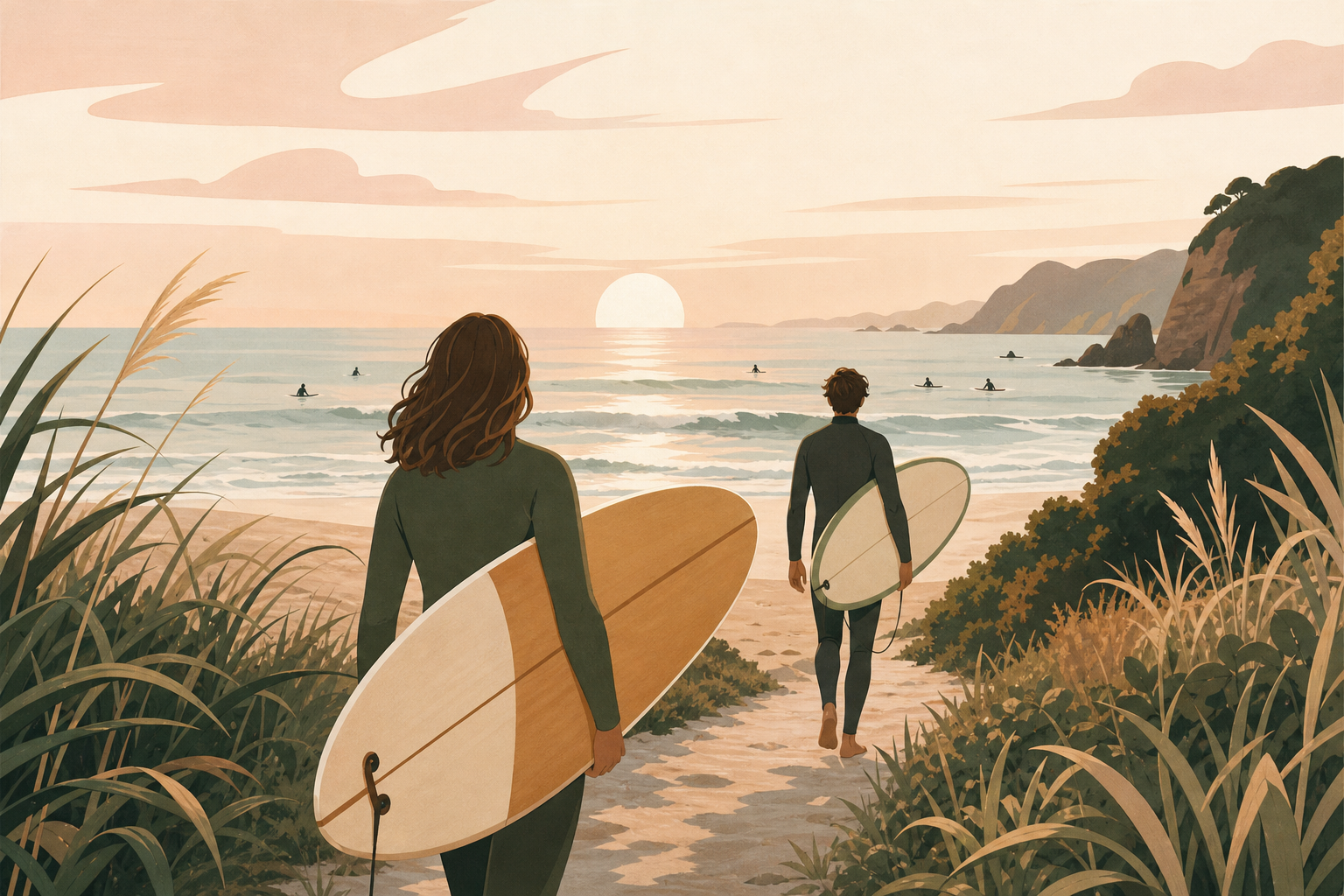
Kanegahama Beach is roughly 10–15 minutes by car from Hyuga Surf Camp, south of Okuragahama. It has both reef-break and beach-break characteristics. When swell has more energy, entry points and the bottom beneath you matter more.
Beginners will often find Okuragahama easier to work with than Kanegahama. At Kanegahama, watch from the parking area before committing: where do people paddle out, where do they return, and what sections are they avoiding? Follow your instructor’s plan rather than copying more experienced surfers.
Season and wetsuits
Surf travel in Japan is seasonal, but no month guarantees ideal beginner conditions. Water and air temperature, wind, typhoon activity, wetsuit needs, and lesson availability all vary. Miyazaki is often milder than northern surf regions, but confirm wetsuit requirements with your provider close to departure.
Autumn can bring changing weather systems and stronger surf potential; summer can overlap with typhoon-related changes; winter mornings can feel cold in damp gear. Keep your itinerary flexible.
How should you plan a first surf day in Hyuga?
Plan around a morning beach check, a confirmed lesson or rental, and a flexible afternoon. A rental car gives beginners much more freedom than trying to move wet gear and boards by taxi or train.
Check early
Drive roughly 15–20 minutes from JR Hyuga-Shi Station to Okuragahama Beach, park by the coast, and watch the water before changing.
Confirm locally
Meet your pre-arranged school or rental provider, explain your experience honestly, and follow their decision on location, equipment, and timing.
Keep the afternoon open
Eat, rinse off, then use the rest of the day for the Hososhima coast rather than forcing an unsupervised second session.
Book coaching and equipment before arrival
Do not assume you can find a beginner board, wetsuit, or English-language lesson simply by arriving at the beach. Contact providers ahead of time, especially for groups or if you need soft boards in particular sizes.
A first lesson covers the practical details online videos skip: carrying a board safely around other beach users, falling away from the board, avoiding standing behind another learner’s board, and knowing when to stop. If you bring your own board, check accommodation rules before arrival rather than assuming storage or drying space.
Have a backup coastal plan

If the ocean is unsuitable for your level, use the Hososhima area instead of forcing a session. Cross no Umi is about 20–25 minutes by car from Hyuga Surf Camp. Umagase Cliffs and Omi Shrine are roughly 25–30 minutes away.
They are not surf breaks; they are useful weather-flex stops. Wear shoes with grip for the Umagase walkway, keep children close near cliff-side areas, and expect the wind to feel cooler along the coast.
Where should beginners stay on a Japan surf trip?
Choose accommodation based on easy morning checks and group logistics, not only distance from a famous surf peak. A hotel near JR Hyuga-Shi Station suits solo travellers without a car who value rail access and town facilities. A whole-house coastal stay can suit groups sharing a rental car, wetsuits, snacks, and changing plans.
A practical first-trip selection list
- Okuragahama Beach day base — beachside parking; roughly 15–20 minutes by car from JR Hyuga-Shi Station; best suited to complete beginners with a pre-booked lesson.
- Kanegahama Beach check-and-watch — roughly 20–25 minutes by car from JR Hyuga-Shi Station and 10–15 minutes from Hyuga Surf Camp; better for progressing surfers following local guidance.
- Hyuga Surf Camp — roughly 5–10 minutes by car to Okuragahama Beach and 10–15 minutes to Kanegahama Beach; suits groups and visitors using a car.
- JR Hyuga-Shi Station area hotel — roughly 15–20 minutes by car to Okuragahama Beach; practical for solo visitors arriving by rail, provided transport and meeting logistics are arranged.
- Cross no Umi plus beach base — around 20–25 minutes by car from Hyuga Surf Camp; useful for mixed groups when not everyone surfs.
- Umagase Cliffs and Omi Shrine route — roughly 25–30 minutes by car from Hyuga Surf Camp; a good rest-day or weather-flex route.
Choosing a whole-house stay
Hyuga Surf Camp can suit friends or families travelling by car who want the coast to organise the day: check one beach, discuss the next session over breakfast, and keep gear and people together. It is not necessarily the easiest choice for every traveller; a station-area hotel may be simpler for a solo visitor focused on rail travel.
Confirm current rates, dates, occupancy details, and facilities directly. If a coastal whole-house setup fits your trip, [Check availability & rates]. Availability and pricing can change around holidays and surf-event periods.
What safety habits matter most for first-time surfers?

Let the day’s conditions overrule your holiday schedule. A provider’s decision to delay, move, or cancel is not a wasted day; it is part of responsible surf travel.
Read the beach from dry land
Watch for several minutes before entering. Notice where waves break differently, where surfers paddle out and return, and whether learners are sharing a small area. Do not paddle directly into the busiest take-off zone.
Beach breaks can still have strong water movement, changing sandbars, shorebreak, and loose boards. At Kanegahama, reef-influenced sections add another reason not to improvise. Avoid surfing alone as a beginner.
Learn etiquette early
Surf etiquette is also safety etiquette. Keep control of your board, do not let it fly behind you when falling, and look both ways before paddling for a wave. A surfer already riding has priority. Do not drop in from the shoulder simply because you are excited to stand up.
Do not chase a forecast screenshot
Forecasts help planning, but local checks of wind, tide, swell, and beach setup should guide the actual session.
Do not use a hard board as a first default
Use equipment recommended by your instructor or rental provider.
Do not leave valuables loose by the sand
Use your car or an agreed group plan, and keep parking areas clear.
Bring drinking water, sunscreen, a towel, dry clothes, a wet-items bag, and footwear for hot sand or rough parking surfaces. Confirm rash guard or wetsuit needs with your provider. Slow down when carrying boards back across the sand, especially near other beach users and parked cars.
How can you make a three-day beginner surf trip manageable?
A manageable three-day trip includes one coached surf attempt, one flexible repeat opportunity, and time for the coast if conditions change.
Day one: arrive and inspect the beach

Arrive in Hyuga, collect a rental car if using one, and check into your accommodation. Buy food and basics before heading to the coast. Near sunset, visit Okuragahama Beach and watch from the parking area. Notice the sand line, wave pattern, and how surfers move through the space.
Day two: take the coached session seriously
Meet your provider at the agreed time and describe your experience accurately. If you have never stood on a board, say so. After the lesson, do not rent another board and paddle back out unless your instructor recommends it.
Use the afternoon for Cross no Umi, Umagase Cliffs, or Omi Shrine, depending on energy and daylight.
Day three: repeat only if conditions fit
If a follow-up lesson, rental, and conditions are appropriate, return with the same calm approach. Repeating basic positioning and pop-ups at the same beach is more valuable than chasing a more advanced-looking spot. If not, enjoy a slow coastal morning and leave enough energy to drive safely.
FAQ
Q: Can a complete beginner surf in Japan? A: Yes, with a pre-booked beginner lesson or suitable local guidance at a beach appropriate for that day. Not every surf spot or forecast is suitable for a first session.
Q: Is Okuragahama Beach suitable for beginners? A: It is commonly a practical starting point because it is a sandy beach break with beachside parking, but wind, waves, tide, and crowds vary daily. Check locally before entering.
Q: Do I need a car for a beginner surf trip to Hyuga? A: A car is strongly practical because Okuragahama Beach is roughly 15–20 minutes by car from JR Hyuga-Shi Station and surf gear is awkward on public transport. Confirm your provider’s meeting arrangement if you do not drive.
Q: What can non-surfers do near Hyuga? A: Cross no Umi, Umagase Cliffs, and Omi Shrine make a sensible coastal half-day. They are roughly 20–30 minutes by car from Hyuga Surf Camp.
Keep your first plan simple: one beach, one provider, and one flexible afternoon. A base near Okuragahama Beach and Kanegahama Beach makes it easier to respond to the morning check instead of spending the day in the car.
RESERVATION
Book Your Stay at Hyuga Surf Camp
A whole-house surf guesthouse in Hyuga, Miyazaki — close to Okuragahama and Kanegahama. Ideal for surf trips, groups, and beginners to experienced surfers. Check availability and rates on the booking site.
Book Your Stay at Hyuga Surf Camp
Please confirm current rates, availability and amenities on the booking site.
Comment